ROI-positive in month one from freight operations intelligence
A national freight provider turned fragmented operational data into real-time intelligence — ROI-positive in the first month.
Result: Month 1 ROI-positive · 40% less idle time (first quarter) · Real-time ops & dispatch (was weekly) · Per-run profitability (was monthly)
What they were up against.
This national freight provider had grown aggressively for five years — adding routes, depots, and drivers faster than the systems holding it together could keep up. Dispatch ran off whiteboards and phone calls. Load utilization lived in Excel. Driver hours were reconciled two weeks after the fact. Leadership knew they were leaving money on the table; they just couldn't see where, or how much. The ask was simple: we need to see what's actually happening in our operation, in real time, from one place.
- Dispatch decisions made without real-time load or driver-availability data
- Idle time only visible on the payroll report — two weeks later
- Route profitability calculated monthly, never by individual run
- No way to know if a driver was on time, delayed, or broken down without calling them
- Customer-service reps tracking deliveries by phoning drivers
- Management reports that took three days of Excel before every Monday meeting
How we did it.
Operational mapping
Two weeks embedded with dispatch, operations, and drivers — mapping every workflow, data source, and decision point. We didn't guess what mattered; we watched it.
Data architecture
A real-time pipeline connecting GPS telemetry, load management, driver scheduling, and customer data into a single operational layer.
Intelligence layer
Dashboards and alerts built with the people who'd use them — dispatch, ops managers, executives — not for them.
Phased rollout
Live with dispatch and ops dashboards first (immediate ROI), then route profitability, customer-facing tracking, and executive reporting.
What changed.
- Within 30 days of go-live, the client had recovered more in reduced idle time and improved dispatch efficiency than the entire project had cost.
- Over the next year it became the operational backbone of the business — used by everyone from drivers checking their schedule to the CEO reviewing weekly performance.
- Route-level profitability surfaced several customer relationships that were quietly underwater, with the data to renegotiate them from a position of clarity.
- Idle time dropped 40% in the first quarter, and customer-service call volume fell as real-time tracking gave customers visibility they'd never had.
The system.
Real-time operations dashboard
Every driver, load, and route — with live status, location, and on-time performance.
Dispatch intelligence module
Recommended load assignments by driver availability, location, hours, and route history. Dispatch decisions went from minutes to seconds.
Route profitability engine
Per-run revenue and cost, showing which routes, customers, and lanes made real margin — not just revenue.
Driver & customer apps
A driver app for schedule, loads, and navigation; a customer portal for real-time tracking and ETAs.
Inside the build.
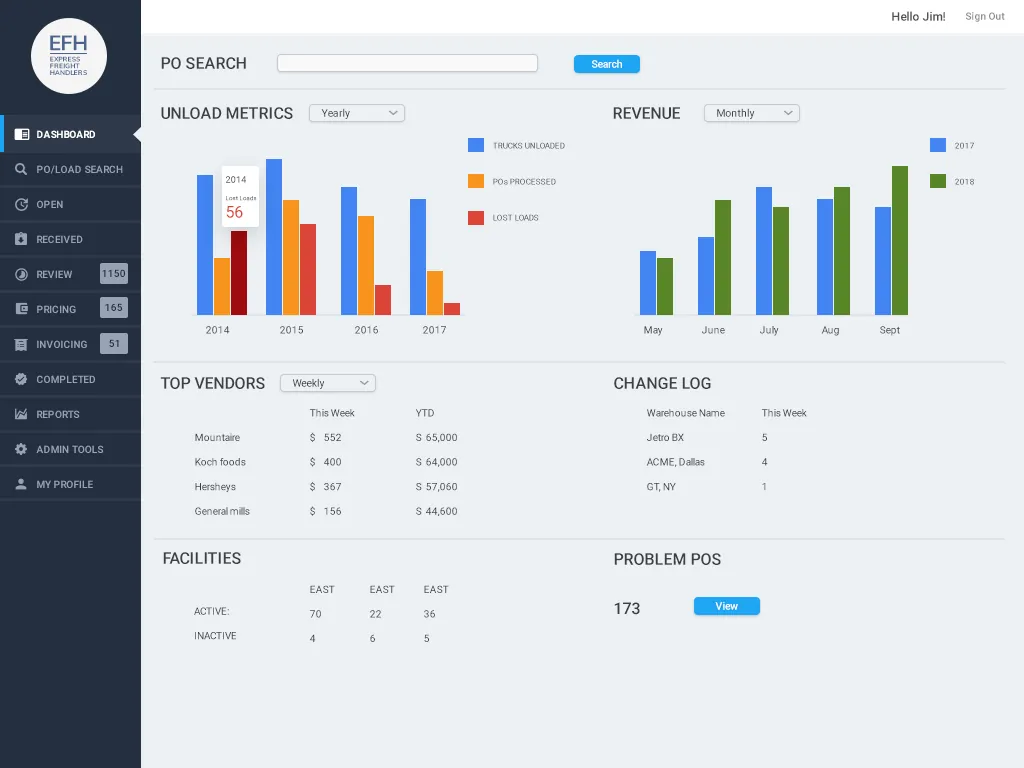
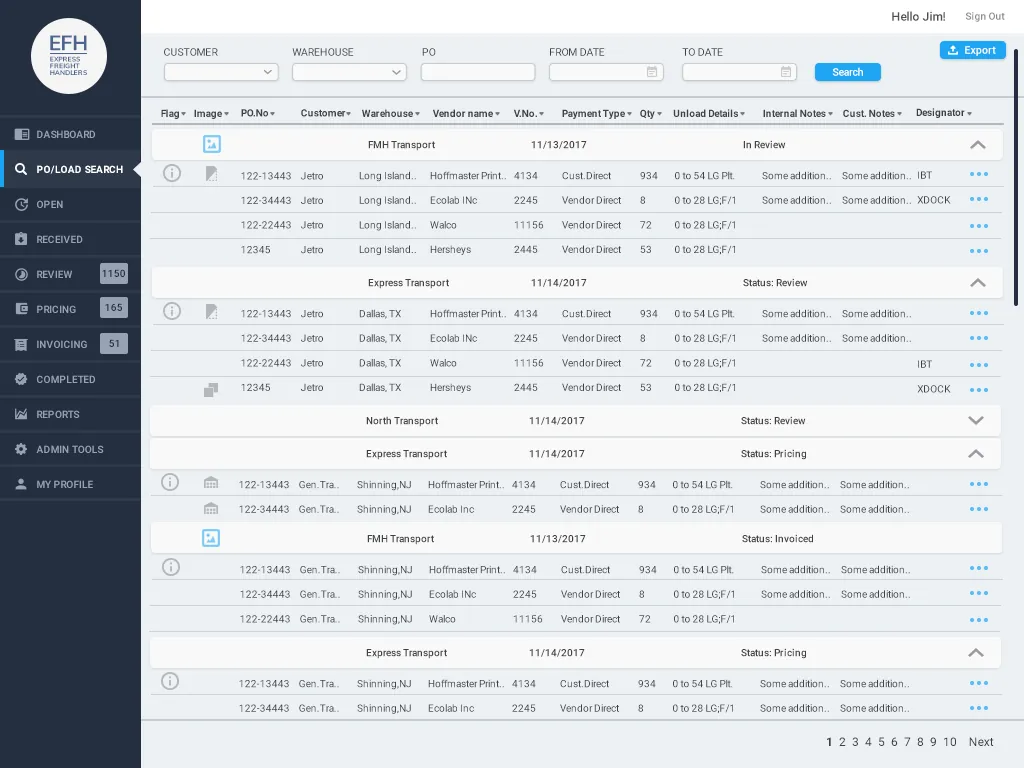
From an operational standpoint, we have seen dramatic improvement.
Other results like this.
$24M in new revenue, untangled in two months
After an acquisition stalled on tangled systems and data, we untangled it fast — protecting $24M in new revenue in two months.
Scaling K-12 test prep from 350K to 800K+ students
Modernized the platform behind a K-12 essay-scoring service so it could scale from 350,000 to more than 800,000 students without breaking.
12 Systems Into One AML Platform — 75% Fewer False Positives, Zero Regulatory Findings
A financial services firm consolidated 12 fragmented source systems into one audited AML data warehouse, rebuilt detection on top of it, cut false positives 75% — and passed its next regulatory examination with zero findings.
Go deeper.
AI Consulting for Operations: A Practical Guide for Operators
Most AI consulting firms are built to advise. A few are built to build and run. Here's how mid-market operators tell the difference before they sign — and the criteria that actually predict delivery.
Best AI Consulting Firms for Operations (2026)
A criteria-based buyer guide for mid-market operators choosing an AI consulting partner that builds and runs production systems — not strategy decks.